Child car safety in the UAE: front-seat rules for 2027
UAE child car safety rules keep age and height checks separate from the 2027 seat changes. Learn the thresholds, exceptions and fine uncertainty.
- 8 min read
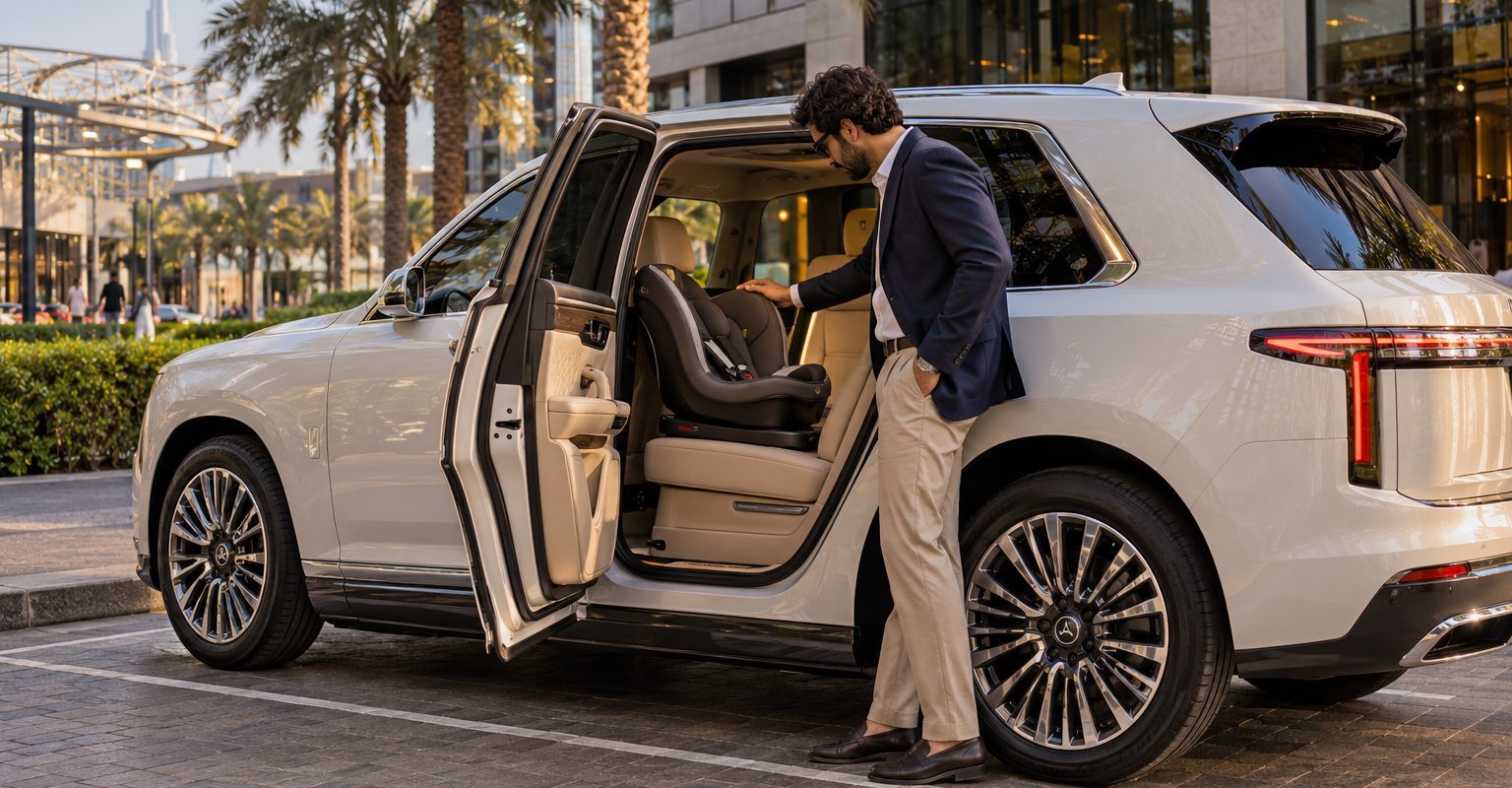
Child car safety rules in the UAE separate front-seat eligibility from child-seat requirements. Use the conservative threshold: older than 10 and at least 145 cm, based on Roads and Transport Authority (RTA) guidance as of December 2022. The newly announced provisions concern restraints and exceptions, not general permission for children to sit in front.
Key facts
- As of November 2026, Emirates News Agency (WAM) says Cabinet Resolution No. 174 of 2026 takes effect on 1 January 2027.
- As of November 2026, WAM’s announcement requires children aged 4 and under to use an appropriate child-protection seat in the rear, subject to specified exceptions.
- As of December 2022, RTA’s published wording restricts front-seat travel for children aged 10 or below, or shorter than 145 cm.
- As of this November 2026 review, the undated UAE Government fine schedule lists AED 400 and no black points for the front-seat violation.
- As of this November 2026 review, the undated Sharjah Police General Directorate FAQ instead lists AED 400 and 4 traffic points for allowing a child under 10 in front.
Can a child sit in the front seat in the UAE?
A child should meet both the age and height conditions before using the front passenger seat. Being tall enough does not cancel the age restriction, and being old enough does not cancel the height restriction.
For the UAE child front seat age and height test, use the conservative wording: older than 10 and at least 145 cm, based on RTA guidance as of December 2022.
The wording matters because a prohibition using “or” does not create permission using “or”. If either restriction applies, do not treat the child as eligible for the front seat.
Also, keep front-seat eligibility separate from restraint suitability. Passing an age-and-height test is not an instruction to stop checking seat-belt fit or the restraint manufacturer’s instructions.
What changes to child car safety take effect in 2027?
The announced changes concern child-protection seats, their placement and limited exceptions. They do not announce a replacement for the existing front-seat age-and-height restriction.
As of November 2026, WAM’s announcement dated 4 November says the regulation starts on 1 January 2027 and requires children aged 4 and under to use a rear-seat child restraint suited to their weight and height and compliant with applicable UAE standards.
The distinction is practical: ask where the child may sit, then ask which restraint the child needs. Do not assume that a child who has outgrown a particular seat may therefore sit in front.
| Question | Existing front-seat rule | Announced child-seat provision | What to verify |
|---|---|---|---|
| Can the child sit in front? | Both age and height restrictions matter. | The announcement does not state a general relaxation. | Check current authority wording before moving the child forward. |
| Which restraint is suitable? | Front-seat eligibility is a separate question. | The seat must suit the child’s weight and height and meet UAE standards. | Check the seat specification and installation instructions. |
| Does a medical circumstance change placement? | Do not assume permission to sit in front. | A medical certificate and an accompanying adult in the rear are required. | Confirm that the documented circumstance qualifies. |
| What if the vehicle has no rear seats? | The interaction with the separate restriction remains unclear in the summary. | The summary describes a rear-facing seat with the airbag deactivated. | Obtain authority confirmation before relying on this provision. |
These announced restraint conditions come from WAM’s November 2026 regulation summary. However, a summary cannot resolve every vehicle-specific situation.
Can a child seat go in a car without rear seats?
The official announcement describes front installation in a vehicle without rear seats, using a rear-facing child seat and a deactivated airbag. However, it does not explain how that provision interacts with the separate front-seat age-and-height restriction.
As of November 2026, those installation conditions appear in WAM’s official announcement. Therefore, do not read them as blanket permission to carry a young child in any front passenger seat.
Before relying on the provision, ask the relevant traffic authority to confirm how it applies to your vehicle and child. Also, check the vehicle and restraint instructions for installation compatibility.
If you cannot establish that the arrangement is permitted and suitable, choose a vehicle with an appropriate rear-seat arrangement instead.
Does a medical certificate allow a child to sit in front?
The announced medical exception is not a general front-seat exemption. It requires a medical certificate and an adult accompanying the child in the rear seat.
Those conditions come from WAM’s announcement as of November 2026. Consequently, a certificate should not be treated as permission to choose any seating position.
If your child has a medical circumstance affecting restraint use, confirm the exact requirements with the traffic authority and the treating clinician before travelling.
What is the UAE fine for a child sitting in front?
The published official sources agree on the monetary fine but disagree about traffic points. Therefore, do not present the points position as settled.
| Official source | Fine | Points shown | Source qualification |
|---|---|---|---|
| UAE Government fine schedule | AED 400 | No black points listed | As of this November 2026 review; publication date not shown in the supplied source |
| Sharjah Police General Directorate FAQ | AED 400 | 4 traffic points | As of this November 2026 review; publication date not shown in the supplied source |
As of this November 2026 review, the undated UAE Government schedule lists AED 400 without points, while the undated Sharjah Police FAQ lists AED 400 and 4 points.
For the UAE front seat child fine, check the current schedule with the relevant police authority. Rules change, and these conflicting publications do not establish a single confirmed points outcome.
What should you check before driving with a child?
Check seating eligibility, restraint suitability and any exceptional circumstances before you set off. This keeps the front-seat question separate from the child-restraint question.
- Check the child’s age and measured height against the front-seat restriction.
- Select the appropriate restraint for the child’s weight and height.
- Check the applicable rear-seat placement requirements for your travel date.
- Confirm any medical or no-rear-seat arrangement with the traffic authority.
- Check the current official fine schedule if you need penalty information.
Also, read the vehicle and child-seat instructions before installation. A restraint provision does not establish that every seat fits every vehicle.
Where can UAE Parking help with your journey?
UAE Parking helps with parking preparation, not child-restraint decisions. It is an independent, free app for iPhone and Android, plus a website.
You can save your number plates on your device. Meanwhile, the Dubai parking city page lists zone rates and operating hours for your destination.
For parking, the sign next to the bay is the final word. For child-safety compliance, rely on the relevant traffic authority and the vehicle and restraint instructions.
For restraint suitability, rear-seat installation and the conditional exceptions, read our guide to UAE child car seat rules.
Frequently asked questions
Does height alone allow a child to sit in the front?
No. The age and height restrictions are separate, so satisfying the height condition alone does not establish front-seat eligibility.
Does the new announcement replace the front-seat restriction?
The announcement describes child-restraint requirements and limited exceptions. It does not announce a general replacement for the existing front-seat age-and-height restriction.
Can a medical certificate automatically permit front-seat travel?
No general front-seat permission follows from the announced medical exception. It requires a medical certificate and an adult accompanying the child in the rear seat.
Does having no rear seats automatically create an exemption?
Do not assume that it does. The announcement describes a rear-facing child seat and a deactivated airbag, but its interaction with the separate front-seat restriction needs authority confirmation.
Bottom line
Keep age and height eligibility separate from child-seat requirements. Also, verify exceptional arrangements rather than treating the new announcement as general front-seat permission. Once you have planned safe seating, you can download the free UAE Parking app for parking preparation.